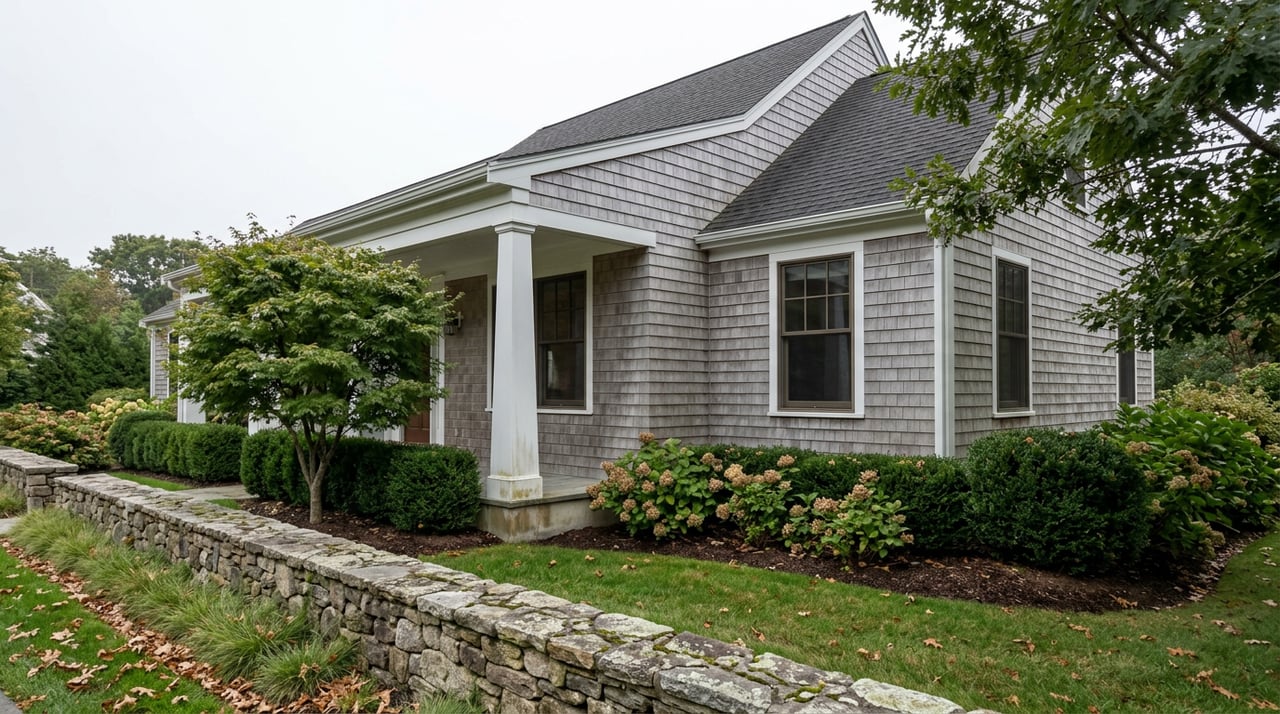
The Wilton Homes Closest to Town Center Aren't Always the Ones on Town Sewer
September 10, 2026
September 10, 2026
A buyer touring homes a few blocks from Wilton Center this fall will notice something that seems to settle the utility question before it's even asked. The house sits close to the train platform, close to the library, close to the restaurants along Danbury Road. Municipal water and sewer feel like a given at that proximity. Then the seller's disclosure or the listing agent mentions a private well and a septic system, and the assumption collapses.
That gap between what a Wilton address implies and what it actually delivers isn't a fluke of one listing. It's a structural fact about how the town's utilities were built out, and it's getting harder to ignore because Wilton's own sewer authority has said publicly that its capacity is limited and it is choosing, deliberately, which parts of town get priority for a hookup. If you're buying or selling in Wilton, that choice affects your timeline, your contract, and your negotiating leverage more than the square footage on the listing sheet.
Connecticut's Department of Public Health estimates that roughly 40 percent of the state's residents live in homes served by private, on-site septic systems rather than municipal sewer. Wilton fits that pattern more than it departs from it. The town's own Tax Collector's office only bills sewer and water capital assessments and usage charges to properties that actually benefit from a sewer line or sit on a town water line, which tells you plainly that a meaningful share of Wilton's housing stock is not connected at all. The town's Health Department, not the water utility, is the office that handles septic system as-built plans and well permits, because for most residential parcels, that's the system in place.
This isn't unique to large-lot subdivisions out toward the Ridgefield or Weston lines. It applies close to the village center too, which is the part buyers tend to miss.
In July 2024, Wilton's Water Pollution Control Authority approved a batch of sewer capacity allocations for a mix of projects, including an expansion tied to ASML and several new multifamily developments. The vote came only after the town's engineering team modeled the system and identified where aging infrastructure, cracked pipes and faulty manhole covers, was letting excess groundwater flow into the sanitary sewer and eat up capacity that should have gone to new connections. One board member described the math bluntly, noting the projections were coming in within 40,000 gallons of the system's limit of 650,000.
"Remember, we're not [in] the clear."
That caution matters because the same meeting laid out an explicit priority order for whatever capacity does open up: the Wilton Center Transit-Oriented Development area first, then Wilton Center generally, then the Danbury Road corridor. Properties outside those zones, even ones within easy walking distance of the center, are not next in line. They may not be in line at all. A separate application that same night, for a property with frontage on both Danbury Road and Cannon Road, was denied outright, with the board and the town's Health Department concluding that expanding the existing septic system made more sense than adding a sewer lateral.
The practical takeaway isn't that Wilton's sewer system is in crisis. It's that hookup decisions are being made lot by lot, based on a capacity ledger the town is actively managing, and that ledger doesn't move in a buyer's favor just because a house looks close to downtown on a map.
Connecticut treats private well and septic systems as a defined contract event, not an afterthought bolted onto a general home inspection. The standard-form Well/Septic Rider used across the state spells out exactly who pays for what and on what clock.
| Item | Typically paid by |
|---|---|
| Well inspection and yield test | Buyer |
| Septic system inspection | Buyer |
| Digging required for the septic inspection | Negotiable, checked in the rider |
| Pumping or cleaning recommended by the inspector | Negotiable, checked in the rider |
| Riser retrofit if required under the Public Health Code | Seller |
| Pumping if the tank was serviced within the prior 6 months | Often waived for buyer |
Once the inspection report comes back, the rider gives the buyer a narrow five-calendar-day window after the contingency date to negotiate repairs with the seller or walk away with a written notice. That's a tight runway, and it sits on top of Connecticut's already compressed inspection contingency, which generally runs 10 to 14 calendar days from contract execution.
Fairfield County adds one more wrinkle that the rest of the state doesn't share. In much of Connecticut, buyer and seller sign a single binding contract on day one and every contingency clock starts immediately. Fairfield County more commonly runs on what local attorneys call a two-step process: an initial non-binding binder, followed by inspections, including well and septic, before the formal Purchase and Sale Agreement is signed and the 10 percent deposit changes hands roughly 10 to 14 days later. That sequencing exists precisely because well and septic issues in this part of the state are common enough that attorneys prefer to know the answer before locking in the larger deposit.
Connecticut also does not guarantee buyers an automatic attorney review period the way some neighboring states do. If you want one, it has to be written into the contract, and the customary window when it is included tends to run about five business days. Skipping that step, or assuming it's standard, is one of the more avoidable mistakes a buyer can make on a Wilton purchase.
July 2026 sales data for Wilton show a median price of $1,194,000, with homes selling in an average of 19 days, down from 27 days the year before. A market moving that quickly leaves less room for a slow-motion septic negotiation. If a well or septic issue surfaces during the inspection window, buyers who understand the rider's terms and the five-day negotiation clock walk into that conversation with more leverage than buyers discovering the process for the first time under deadline pressure.
Does a house near Wilton Center automatically have town sewer? No. Wilton's Water Pollution Control Authority has stated publicly that it is prioritizing limited remaining capacity for the Wilton Center Transit-Oriented Development area, Wilton Center generally, and the Danbury Road corridor, in that order. Being nearby does not guarantee a hookup exists or is coming.
Who pays to pump the septic tank before an inspection? Under the standard Connecticut Well/Septic Rider, pumping recommended by the inspector is typically negotiated case by case, though a tank pumped within the six months before the inspection often doesn't need it again for that purpose. Riser retrofits required under the state's Public Health Code are customarily a seller expense.
How long does a septic or well contingency actually take in Connecticut? The inspection itself generally must be completed within a set number of calendar days written into the contract, commonly 10 to 14. Once the report is in hand, buyers have five calendar days after the contingency date to negotiate repairs or terminate in writing, which is a short window if you haven't already lined up your septic contractor.
If you're weighing a purchase or sale where well and septic status is part of the picture, it helps to have a team that reads the fine print before you're under deadline pressure. LM Homes Team has walked Fairfield County buyers and sellers through exactly this kind of due diligence for years. Schedule a consultation and let's look at what your specific address in Wilton actually comes with.
Stay up to date on the latest real estate trends.




We believe exceptional results come from thoughtful planning, trusted relationships, and personalized service. By working together as one seamless team, we provide comprehensive guidance, proactive communication, and unwavering advocacy to help you achieve your real estate goals with confidence.

199 POST ROAD EAST WESTPORT, CT 06880